


Media Coverage | Văn Hóa và Phát Triển (Culture and Development)
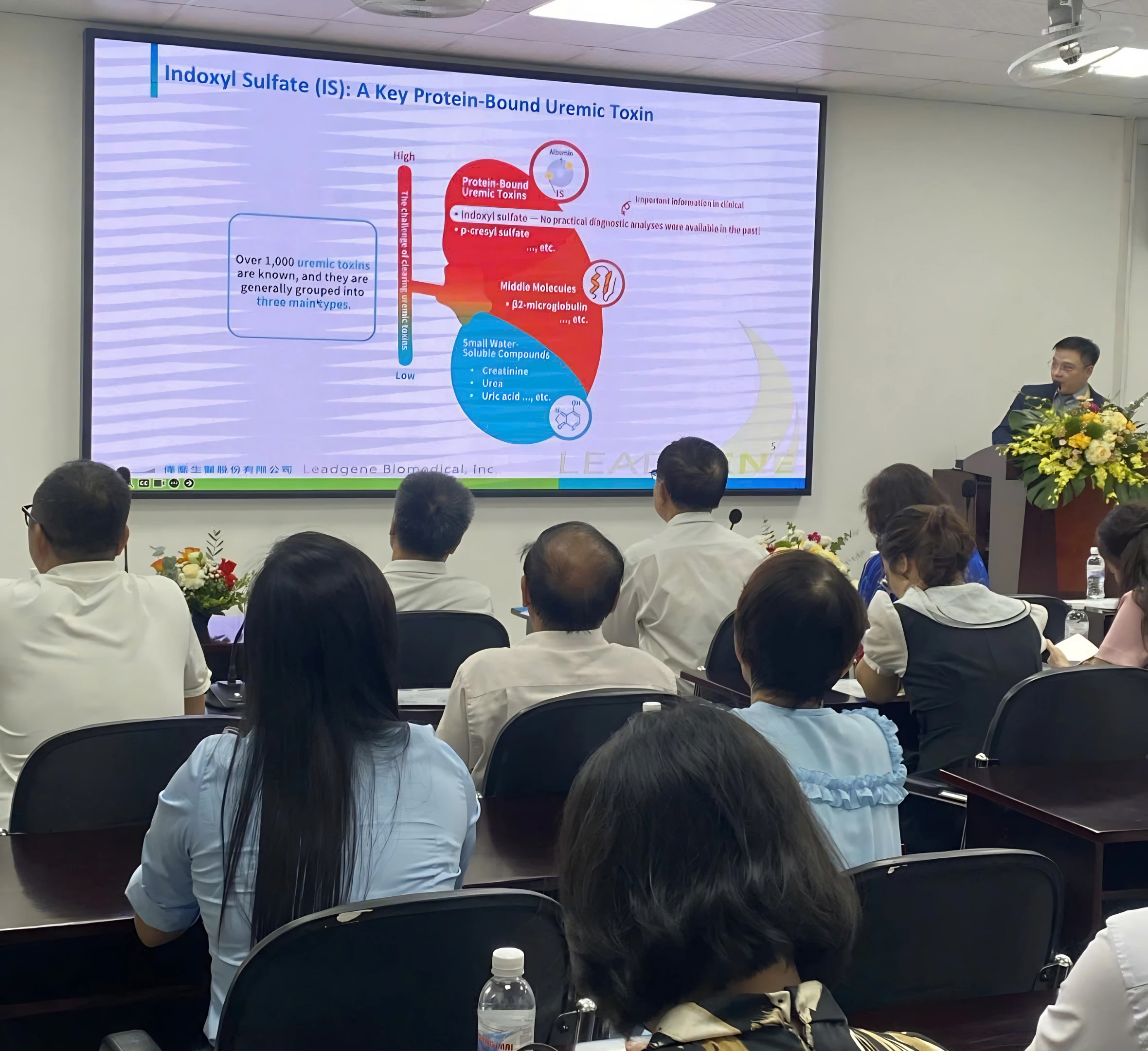
On October 9, 2026, Leadgene Biomedical hosted a seminar titled “A Multidimensional Assessment of Kidney Function: The Additional Perspective Provided by Indoxyl Sulfate” at Hanoi University of Business and Technology (HUBT) in Vietnam. The event brought together nearly 100 researchers, university professors, physicians, department heads, and representatives from healthcare institutions across Vietnam and Taiwan.
The seminar focused on the role of the uremic toxin Indoxyl Sulfate (IS) in chronic kidney disease (CKD), alongside the application of the IS ELISA Kit in renal function assessment, intervention monitoring, and clinical research.
Taiwan and Vietnam Face Similar Challenges in Chronic Kidney Disease
According to Vietnam’s Ministry of Health, more than 10 million people in Vietnam are living with chronic kidney disease (CKD), representing approximately 10%–12.8% of the population. The clinical burden is profound, with tens of thousands of end-stage renal disease (ESRD) patients relying on renal replacement therapies—such as dialysis or kidney transplantation—to sustain life.
Similarly, despite Taiwan's advanced medical infrastructure, its incidence and prevalence of ESRD rank among the highest globally. According to research cited in the Vietnamese media report, CKD affects approximately 10% of Taiwan’s adult population, equivalent to nearly 2 million people.
With CKD prevalence standing at approximately 10% across both regions, healthcare professionals face a shared, pressing objective: establishing early screening protocols, detecting silent disease progression in a timely manner, and preventing deterioration into end-stage renal disease.
Insights from Leading Medical Experts
The seminar featured distinguished domestic and international experts who shared clinical perspectives and interdisciplinary insights:
- Prof. Dr. Pham Duong Chau – Vice Rector for Health Sciences, Hanoi University of Business and Technology (HUBT): Representing the host institution, Prof. Chau highlighted the importance of translating international research breakthroughs into medical training and clinical practice in Vietnam.
- Dr. Hoang Minh Hang, MD – Vice Head of the Department of Preventive Medicine and Public Health, HUBT: Emphasized a preventative medicine approach, underlining early screening, lifestyle modification, and chronic disease management to reduce the overall public health burden of kidney failure.
- Chris Chuang – Sales Manager at Leadgene Biomedical: Served as a keynote speaker detailing the biological mechanisms of Indoxyl Sulfate in the body, presenting the detection technology of the IS ELISA Kit, and exploring its potential clinical utility as a complementary biomarker for renal evaluation.
- Dr. Chuan-Cheng Hung – Founder of Ever Blessing HealthCare Medical Group: Discussed evolving paradigms in the multidimensional evaluation of renal function, noting that novel biomarkers offer critical supplementary insights beyond traditional indicators to provide a more complete view of kidney health.
Indoxyl Sulfate (IS): A Hidden Hazard in Kidney Disease
Indoxyl Sulfate (IS) is a protein-bound, gut-derived uremic toxin. It is produced when dietary tryptophan is metabolized by intestinal microbiota into indole, which is then absorbed into the bloodstream and sulfated in the liver.
Under normal physiological conditions, circulating IS is excreted through the urine by the kidneys. However, because IS binds strongly to serum proteins, it is difficult to remove through standard dialysis modalities.
As kidney function declines in CKD patients, IS progressively accumulates in the blood, triggering multiple systemic health hazards:
- Renal Cell Damage: IS promotes glomerulosclerosis and tubulointerstitial fibrosis, accelerating the progression of CKD.
- Cardiovascular Damage: IS induces vascular endothelial cell injury, heightening the risk of atherosclerosis and myocardial hypertrophy, which substantially raises the risk of cardiovascular complications in kidney patients.
IS ELISA Kit: A New Horizon for Renal Function Assessment
The seminar highlighted the IS ELISA Kit, a diagnostic assay developed to quantify IS concentrations in serum, plasma, and other biological fluids, offering diverse potential applications:
- Multidimensional CKD Assessment: Complements conventional markers like serum creatinine and estimated glomerular filtration rate (eGFR) by delivering direct uremic toxin concentration data for a comprehensive evaluation of toxin accumulation.
- Intervention and Treatment Monitoring: Serves as a complementary monitoring marker to track patient response to clinical interventions, including dietary adjustments, oral intestinal adsorbents, and specialized dialysis therapies.
- Clinical Research Applications: Opens new research pathways for biomedical studies in Vietnam, particularly in investigating the cross-talk between the gut microbiome, uremic toxins, and cardiorenal syndrome.
The seminar concluded with fruitful discussions and exchanges between Taiwanese and Vietnamese specialists, opening new opportunities for cross-border scientific and biomedical collaboration aimed at elevating the quality of care for patients with kidney disease.
最終更新:
